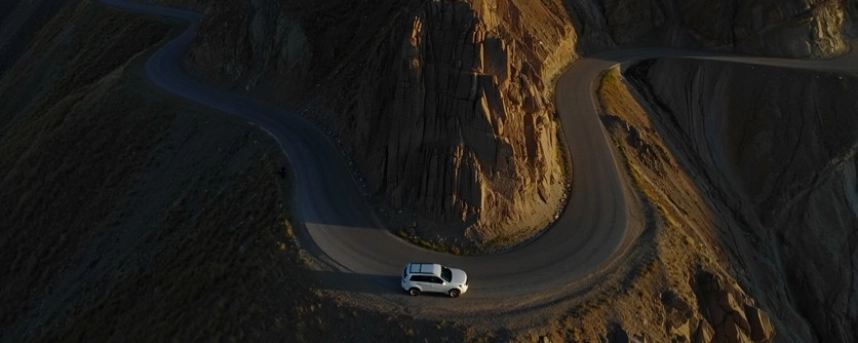
Hello! My name is Anton Shishkin, and I am the Lead Manager at NomadCar. Over the years, I’ve seen how our clients’ eyes light up when they receive the keys to an SUV, dreaming of a trip to Issyk-Kul or the Too-Ashuu Pass. But I also often notice a shadow of concern in their gaze: “Will I be able to handle mountain roads?”
This feeling is completely natural. Mountains demand respect and special skills. The goal of this article is to remove your fears and give you clear, proven instructions that will turn your trip from a challenge into one of the best adventures of your life.
Your Car Is Your Main Ally in the Mountains
A safe mountain trip begins not with turning the key, but with choosing and preparing the right vehicle. Thin air, steep climbs, and long descents make even minor technical issues much more serious.
That’s why at NomadCar we pay special attention to the condition of our fleet.
Why You Need the Right Vehicle for the Mountains
A city sedan may be perfect on flat roads, but in the mountains its limits quickly become clear. Ground clearance, engine power, and especially brake durability are crucial.
That’s why our fleet mainly consists of crossovers and SUVs—they are designed to handle mountain conditions.
What We Check Before Every Mountain Trip
Before handing over a car, our mechanics carefully inspect:
-
Braking system – brake fluid, pads, and discs. Brake overheating on descents is one of the main dangers.
-
Tires – correct pressure and sufficient tread depth for grip on gravel and wet roads.
-
Technical fluids – oil and coolant levels to prevent engine overheating on long climbs.
Planning a trip to Son-Kul Lake or Altyn-Arashan Gorge? These routes require high reliability and clearance. Check our SUV fleet—we’ll help you choose a reliable travel partner.
Golden Rules of Mountain Driving: Uphill, Downhill, and Turns
Mountain driving is very different from city driving. The key principles are smoothness, predictability, and smart use of your vehicle.
Climbing: How to Keep Power and Avoid Stalling
Driving uphill requires steady engine power.
With automatic transmission:
-
Avoid sudden acceleration.
-
Use manual mode or “L/2” mode if gears shift too often.
With manual transmission:
-
Select a lower gear in advance.
-
Keep RPM between 2500–3500.
-
This prevents loss of power and frequent downshifting.
Descending: Master Engine Braking
This is the most important skill in the mountains.

Constant braking on long descents overheats brakes and may cause failure. Instead, use engine braking—slowing down using the engine’s resistance.
Comparison
| Method | Pros | Cons |
|---|---|---|
| Brake pedal | Strong braking | Overheating, wear, loss of efficiency |
| Engine braking | No overheating, better control | Requires skill, slower braking |
How to Use Engine Braking
Automatic transmission:
-
Switch to manual mode or “L/2”.
-
Maintain low, steady speed.
Manual transmission:
-
Descend in the same gear you would climb.
-
Usually 2nd or 3rd gear.
-
Use brakes only when necessary.
Expert Tip
If you smell burning inside the car, your brakes are overheating. Stop safely and let them cool for 30–40 minutes. Never cool them with water—it can warp the discs.
Serpentines: How to Handle Blind Turns Safely
Mountain roads require full concentration.
-
Slow down before the turn. Never brake sharply inside it.
-
Stay in your lane. Crossing into oncoming traffic is extremely dangerous.
-
Use your horn. A short signal before blind turns warns approaching vehicles.

Unwritten Rules and Mountain Driving Etiquette
Right of Way on Narrow Roads
On narrow mountain roads, vehicles going uphill have priority. It’s harder for them to restart on a slope.
Overtaking: Why Patience Matters

Overtaking in the mountains is risky. Do it only on straight sections with full visibility. Never overtake before blind curves or climbs.
Photos: When to Stop
Scenery in Kyrgyzstan is stunning—but never take photos while driving. Stop safely first. Safety always comes first.
Key Principles of Safe Mountain Driving
The mountains of Kyrgyzstan offer unforgettable experiences. Remember three main rules:
-
A well-maintained vehicle
-
Proper driving technique
-
Respect for the road
With these principles and a reliable NomadCar vehicle, your journey will be safe and enjoyable.
Choose your ideal SUV in our catalog or contact us for advice. Safe travels!
Frequently Asked Questions
How do I start uphill with a manual transmission without rolling back?
Two methods:
-
Handbrake method:
Engage handbrake → select first gear → release clutch and add gas → release handbrake. -
Quick pedal transfer:
Move foot quickly from brake to gas while releasing clutch (for mild slopes).
Is automatic transmission suitable for mountain driving?
Yes. Modern automatics adapt well. Manual mode and low gears (“L”, “2”, “3”) make engine braking easy and comfortable for beginners.
What is the most common beginner’s mistake?
Overusing brakes on descents. Many drivers constantly press the brake pedal, causing overheating. Learning to trust engine braking is essential.


