Every place worth seeing in 2026 — split into what you can walk to and what requires a 4x4. With distances, seasons, and the kind of detail that actually helps you plan.
On a map, Kyrgyzstan looks small. Wedged between Kazakhstan, China, Uzbekistan, and Tajikistan, it barely registers next to its enormous neighbours. That visual impression is misleading. Over 90% of the country is mountains, and the altitude range — from 500 meters in the Fergana Valley to 7,439 meters at Peak Pobedy — compresses landscapes that would normally require crossing entire continents. Mars-red canyons, alpine meadows, ancient Silk Road ruins, glaciers, and a lake the size of a small sea — all within a day or two of each other.
The question every traveller faces when planning: what are the best things to do in Kyrgyzstan when there are hundreds of destinations and never quite enough days?
This guide splits the country’s tourist attractions into two honest categories: city landmarks (walkable, cultural, fed by good coffee and cheap taxis) and wild nature spots (the epic stuff that requires a vehicle, a full tank, and offline maps). For the first group, you need comfortable shoes. For the second, you need a 4x4.
📌 Did you know?
Around 40% of Kyrgyzstan lies above 3,000 meters. The country has roughly 2,000 mountain lakes, most of them unreachable by road. This is why so much of the landscape feels untouched — because, for most of human history, it was.

Part 1. City Landmarks: History, Food, and the Buzz of the Bazaar
Kyrgyzstan’s cities are a collision of nomadic heritage, Soviet concrete, and modern Central Asian energy. They deserve more than a layover. Spend a day or two, eat the food, walk the parks, visit the museums — then head for the mountains with context.
1. Bishkek: The Greenest Capital in Central Asia
Many travellers treat Bishkek as a transit point — land at Manas, grab a car, drive east. That is a mistake. Bishkek attractions deserve at least a full day, and the city is genuinely pleasant: wide tree-lined boulevards, oak-canopy parks, third-wave coffee shops sitting next to Soviet-scale plazas.
- Ala-Too Square and the State Historical Museum. The ceremonial heart of the capital. A towering flagpole, the bronze statue of Manas (the national epic hero), and a renovated museum with exhibits spanning petroglyphs to the Soviet era. Free honour guard change every hour.
- Osh Bazaar. Not a tourist market — a working city within a city. Come for the spices, the dried fruits, the kurut (salted cheese balls, the perfect road snack), and the bread fresh from the tandoor. Keep your wallet close and bargain with a smile.
- Erkindik Boulevard. A kilometre-long canopy of old oaks where street musicians play in the evenings, artists sell paintings, and locals drink craft coffee. The closest Bishkek gets to a European promenade — except the mountains are visible at the end of the street.
History note
Until 1926, Bishkek was called Pishpek, after the Kokand fortress that once stood here. From 1926 to 1991, the city was renamed Frunze, after the Soviet military commander Mikhail Frunze, who was born in the city. This is why the IATA code for Bishkek’s airport was originally FRU (now BSZ).
2. Osh: The 3,000-Year-Old Southern Capital

Osh is nothing like Bishkek. It is older, hotter, more traditional, and far more Central Asian in feel. Silk Road caravans passed through here for centuries, and the bazaar energy has not faded.
- Sulaiman-Too Sacred Mountain. Kyrgyzstan’s only UNESCO World Heritage Site, and it is right in the city centre. A rocky outcrop that has been a place of pilgrimage for millennia. Climb to the top — to the small house where Babur, the founder of the Mughal Empire, once meditated — and see the entire city below.
- Jayma Bazaar. One of the oldest continuously operating markets in Central Asia. It has sat along the banks of the Ak-Buura river for over 2,000 years.
- Osh plov. This is not just rice. It is a religion. Made with a special red-brown rice called devzira, slow-cooked lamb, and an obscene amount of carrots, Osh plov is the single dish you must try in the south.
📌 Did you know?
Osh is older than Rome. Archaeological excavations on the slopes of Sulaiman-Too have confirmed that a settlement existed here more than 3,000 years ago.
3. Karakol: Russian Architecture and the Gateway to the Tien Shan
A small, walkable town at the eastern end of Lake Issyk-Kul. Karakol is the staging point for every trekker, skier, and mountaineer heading into the high Tien Shan.
- Dungan Mosque. A wooden mosque built in 1910 by Chinese artisans without a single nail. It looks like a Buddhist pagoda but is decorated with Islamic geometric patterns. One of the most architecturally unusual mosques in Central Asia.
- Holy Trinity Cathedral. A wooden Orthodox church with a green roof and golden domes that survived earthquakes and Soviet anti-religious campaigns.
- Ashlyanfu. Karakol’s signature dish: cold starch and wheat noodles in a spicy vinegar broth. Kyrgyz people drive hundreds of kilometres just for a bowl. Try it at any street stall near the bazaar.
How to Get Around: The Transport Reality
In the cities — Bishkek, Osh, Karakol — you can walk to every landmark or grab a cheap taxi. City infrastructure is straightforward.
But every piece of Kyrgyzstan nature worth photographing sits behind a mountain pass, at the end of a gravel road, and well beyond the reach of any bus. To see the best places to visit in Kyrgyzstan, you need your own wheels — and the right kind of wheels.
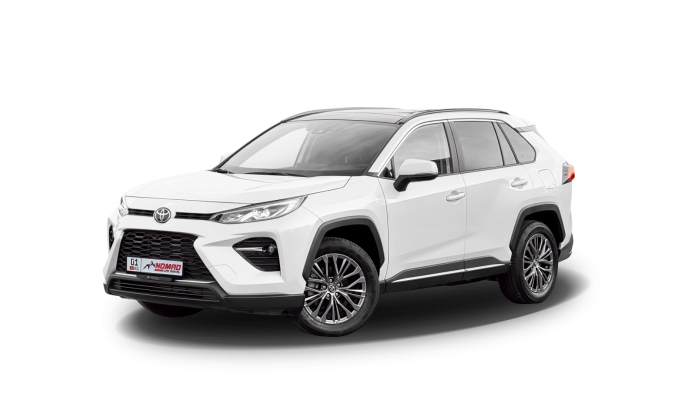
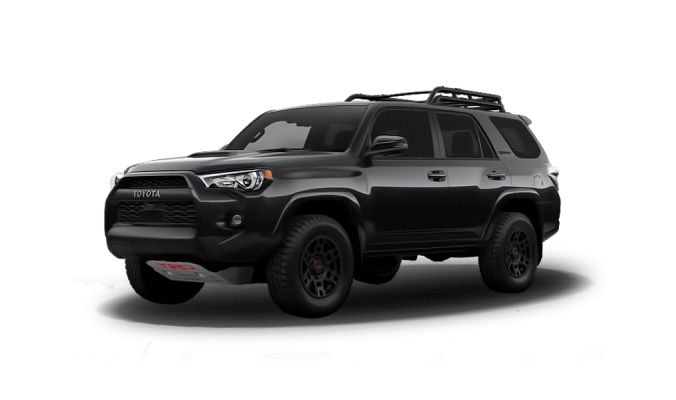
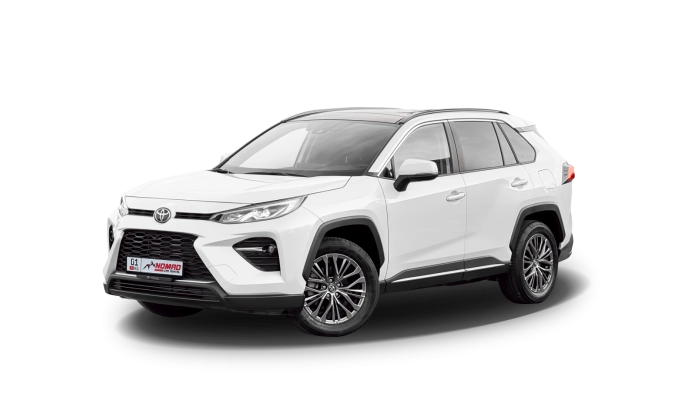
That is where Nomad Car Rental (nomadcar.kg) comes in. We do not just rent cars. We provide fully serviced, reliable 4x4 SUVs built for the conditions of the Tien Shan: Toyota 4Runner, Land Cruiser, Lexus LX 470, and more. Pick one up at Manas Airport, point it toward the mountains, and turn your holiday into an expedition where you decide where to watch the sunrise.
 Part 2. Wild Nature: The Bucket List of Epic Landscapes
If the cities are the cultural warm-up, the mountains are the main act. Below — the locations that stay with you long after the trip ends.
1. Ala-Archa National Park (The Nearest Wilderness)
Just 40 km south of Bishkek. A steep alpine valley with a roaring river, spruce forests, and glaciers visible from the parking lot. Proof that wild Kyrgyzstan nature starts at the city’s doorstep.
- Easy option: a flat riverside trail through the lower valley. Any fitness level.
- Challenge: hike up to the Ratsek Hut at 3,200 m and the Ak-Sai glacier. A full day, serious altitude.
- Transport: paved road to the park gate (any car). Gravel beyond — a crossover or SUV is better.
📌 Did you know?
"Ala-Archa" translates as "colourful juniper." In Kyrgyz tradition, juniper (archa) is considered sacred — its smoke is used to cleanse homes of evil spirits and illness.
2. Burana Tower (A Silk Road Echo)
Eighty kilometres east of Bishkek, a solitary 11th-century minaret stands in an empty valley. Beside it — a field of balbals, ancient stone figures of Turkic warriors that have stared east for a thousand years.
- Climb the tower: a narrow, dark spiral staircase to the top. Vertigo-inducing, but the view across the Chuy Valley is worth it.
- Transport: paved road. Any car.
History note
Burana Tower is all that remains of Balasagun, a wealthy city that served as one of the capitals of the Karakhanid Khanate in the 11th century. The original minaret stood around 45 metres tall. A major earthquake in the 15th century collapsed the upper section, leaving the 24 metres that stand today.

3. Lake Issyk-Kul: Two Shores, Two Worlds
Lake Issyk-Kul is the second-largest mountain lake in the world after Titicaca — 182 km long, up to 668 m deep, and slightly saline, which means it rarely freezes, even in the hardest Tien Shan winters. The lake splits into two very different experiences:
- North shore (Cholpon-Ata): resorts, hotels, sandy beaches, tourist infrastructure. A sedan handles the highway. Good for families and lake holidays.
- South shore: wild, empty, and dramatically more interesting. This is where you find Skazka Canyon (wind-carved red sandstone formations that change colour with the light), Barskoon Gorge (three waterfalls, plus a road that climbs to a glacier plateau at 4,000 m), and Jeti-Oguz (the "Seven Bulls" — deep red cliffs about 28 km from Karakol). A 4x4 earns its keep here.
Practical tip
Driving the full loop around Issyk-Kul covers roughly 600–670 km and takes 3–5 days if you stop at the highlights. The south shore sections involve gravel, so a crossover with 4WD is the minimum. For anything beyond the waterfalls at Barskoon (the Arabel Plateau, the South Bordu Glacier), a body-on-frame 4x4 is non-negotiable.
4. Son-Kul: Sleeping at 3,000 Metres Under a Sky Full of Stars
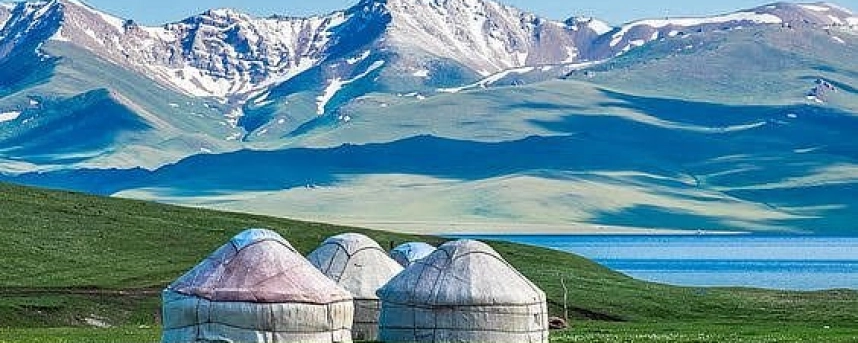
Son-Kul sits at 3,016 metres. No trees. No electricity (in most camps). Just an emerald-green lake, endless grasslands, white yurts, and a silence so complete you hear your own heartbeat.
- What to do: sleep in a real yurt heated with dried dung (it does not smell — but it throws serious heat), drink fresh kumys (fermented mare’s milk), watch the Milky Way without a single artificial light competing for attention, and ride horses for hours across the steppe.
- Season: late June to end of September. The pass is closed by snow outside this window.
- Transport: the approach crosses the Kyzart Pass at 3,350 m on steep gravel. Some travellers attempt it in a crossover — possible in dry weather, risky after rain. A full 4x4 SUV is the safe choice. Fill up in Kochkor — there is no fuel at the lake.
📌 Did you know?
Son-Kul is one of the few places where you can experience genuine nomadic life without a tour operator staging it. The herders who camp here in summer are actual pastoralists, not actors. The yurt you sleep in is the same yurt their family has assembled every June for generations.

5. Tash-Rabat and Lake Kel-Suu: The Deep South
For travellers who want to go as far from civilisation as a car can take them, Naryn Province delivers two extraordinary stops.
- Tash-Rabat: a 15th-century stone caravanserai hidden in a deep gorge near the Chinese border. Inside — a labyrinth of 31 rooms and domed chambers where Silk Road merchants once sheltered from bandits and blizzards.
- Kel-Suu: a 9-kilometre turquoise lake wedged between vertical cliffs hundreds of metres high. The water level fluctuates mysteriously — in some years, the lake drains almost entirely through underground cave systems. A 6 km hike from the nearest road. Border permit required (arrange in Bishkek several days in advance).
History note
Tash-Rabat was originally built in the 10th century as a Nestorian Christian or Buddhist monastery. Centuries later, during the peak of the Silk Road, it was converted into a fortified caravanserai — a highway hotel with thick walls, designed to protect merchants and their cargo from bandits and mountain storms.
6. Sary-Chelek Biosphere Reserve (The Hidden West)
In the far west, in Jalal-Abad Province, Sary-Chelek sits in dense walnut and conifer forests — a complete contrast to the open grasslands of Issyk-Kul and Son-Kul. The water is so clear that submerged tree trunks are visible tens of metres down. Part of the UNESCO biosphere network. Six smaller lakes hide in the surrounding hills.
- Best for: slow walks, forest photography, total digital detox.
- Getting there: the western loop from Bishkek via Too-Ashuu pass and Toktogul. A 4x4 makes the journey comfortable; the final approach is gravel.
FAQ: Planning Your Kyrgyzstan Trip
How many days do I need to see Kyrgyzstan?
Minimum: 7–10 days for Bishkek, Issyk-Kul (both shores), and Son-Kul. To add the south (Osh, Sary-Chelek) or the Chinese border zone (Tash-Rabat, Kel-Suu), plan 14–20 days.
When is the best time to visit?
- June–September: peak season. All passes open, yurt camps operating, Issyk-Kul warm enough for swimming.
- September–October: golden autumn. Fewer tourists, lower prices, spectacular mountain colours. High-altitude nights are cold.
- December–March: ski season. Karakol ski base, backcountry in Jyrgalan. Mountain passes closed.
Can I do this without a guide or tour company?
Yes, and it is arguably the best way. Kyrgyzstan is very safe for independent travel. Locals are welcoming and will help if you get stuck or lost. Download offline maps (Maps.me or OsmAnd) and carry a reliable vehicle.
What car do I need?

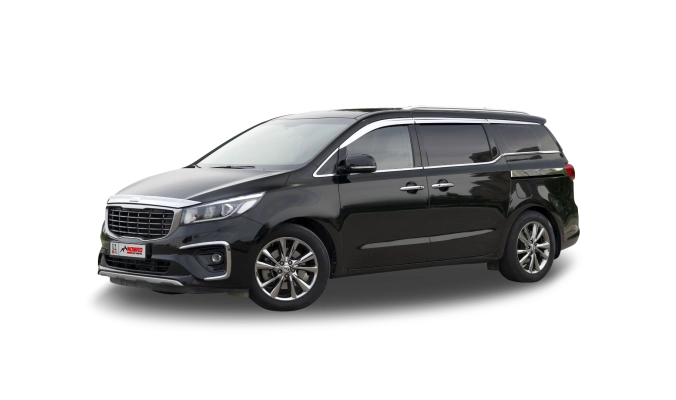
For the main highway (Bishkek–Cholpon-Ata), a sedan works. For the south shore of Issyk-Kul, Jeti-Oguz, and Skazka Canyon — a crossover with 4WD. For Son-Kul, Barskoon above the waterfalls, Kel-Suu, or Tash-Rabat — a full 4x4 SUV with high clearance. At Nomad Car Rental (nomadcar.kg), the fleet covers every tier: from budget sedans to Toyota 4Runner and Land Cruiser. OSAGO and CASCO insurance included. Airport delivery at Manas.
Is Kyrgyzstan safe for tourists?
Generally, yes. It is considered one of the safest countries in Central Asia for independent travellers. Standard precautions apply: keep valuables out of sight, fuel up before remote stretches, carry cash outside cities.
Kyrgyzstan does not reward rushing. Do not try to pack every location on this list into a five-day sprint. Pick your rhythm. The cities will give you history, food, and context. The wild places will give you the kind of silence and scale that modern life rarely offers.
Book a 4x4 at nomadcar.kg. Load your offline maps. Pack a warm jacket — even in July, the passes get snow. And go collect your own set of moments. The Tien Shan is waiting.