Everything you need to know before booking your ticket: distances, money, connectivity, and the untold rules of the road
If you are reading this, chances are you have just started looking into Central Asia and are wondering where is Kyrgyzstan, what the people are like, and how to actually get around without getting lost in the mountains. Maybe you saw a breathtaking photo of an alpine lake, or a fellow traveller mentioned it as the ultimate off-the-beaten-path destination.
Whatever brought you here, welcome. Kyrgyzstan is a country that consists of 90% mountainous terrain, where the population is just over 7 million people, and the driving distance between the two major cities spans more than 600 kilometres across dramatic, high-altitude passes.
Below is your foundational guide. We cover all the essentials — from the Kyrgyzstan flag meaning to the local currency, language, and practical tips you will not find in a standard Wikipedia article.
Where Is Kyrgyzstan: Geography, Borders, and Scale

For anyone opening a map of Central Asia for the first time, the most immediate question is: where is Kyrgyzstan exactly? Officially known as the Kyrgyz Republic, this landlocked nation sits right in the heart of Central Asia, within the western and central parts of the Tian Shan and Pamir-Alay mountain ranges.
The country covers 199,951 square kilometres — roughly the same size as Senegal, Belarus, or the US state of Nebraska.
The Neighbours
- North: Kazakhstan (approximately 1,224 km of shared border).
- West: Uzbekistan (about 1,314 km).
- Southwest: Tajikistan (around 972 km).
- East and Southeast: China (roughly 1,049 km).
Kyrgyzstan is landlocked — no ocean access. But it has Lake Issyk-Kul: one of the largest alpine lakes in the world, 182 km long, up to 668 m deep. And mountains: 94% of the territory lies above 1,000 metres. The highest peak is Jengish Chokusu (Peak Pobedy), 7,439 m, on the Chinese border.
📌 Did you know? There are nearly 2,000 alpine lakes across Kyrgyzstan. Most have no road access — reachable only by multi-day trek or on horseback. The notable exceptions are Issyk-Kul and Son-Kul, both accessible by car.
The Reality of Distances
Looking at Kyrgyzstan on a flat map is deceptive. Here is what distances actually mean in practice:
- Bishkek to Osh (south): about 670 km. The highway crosses three mountain passes including Too-Ashuu (3,150 m). Travel time: 10–12 hours.
- Bishkek to Karakol (east): roughly 400 km, 5–6 hours along the shores of Lake Issyk-Kul.
- Bishkek to Naryn (centre): about 300 km, 5 hours.
- Bishkek to Son-Kul: 280–300 km, but 5–6 hours because the final 50 km is steep gravel over a 3,350 m pass.
These distances and the mountainous terrain are why having your own vehicle matters. Public transport connects the major cities, but the most rewarding destinations — canyons, waterfalls, alpine lakes — sit at the end of roads that buses do not reach. Depending on your route, you may need anything from a sedan to a full 4x4 SUV.
The People: Kyrgyzstan Population in 2026
The Kyrgyzstan population 2026 figure, according to Worldometers estimates, is approximately 7.4 million. The country ranks 106th globally.
Ethnic Composition
- Kyrgyz: 8%.
- Uzbeks: 2% (predominantly in the south — Osh and Jalal-Abad).
- Russians: 8% (mostly in Bishkek and the Chuy region).
- Dungans: 1% (descendants of Chinese Muslims, mainly around Karakol).
- Uyghurs, Tajiks, Turks, and others: ~3%.
Unlike many post-Soviet countries, Kyrgyzstan’s rural population (58%) still exceeds the urban (42%). Bishkek has about 1.1 million residents; Osh, the “southern capital,” about 350,000.
📌 Did you know? The Dungans are descendants of Chinese Muslims who fled to Central Asia in the late 19th century. The Dungan Mosque in Karakol was built in 1910 entirely from wood without a single metal nail. Their signature cold noodle dish, ashlyanfu, has become the city’s gastronomic symbol.
Communication: What Is the Kyrgyz Language?
The state language is Kyrgyz (Kipchak branch of the Turkic family). The official language of business and administration is Russian.
- Bishkek: most people speak fluent Russian. Signs and menus in both languages.
- Karakol and Issyk-Kul region: Russian widely spoken.
- South (Osh, Jalal-Abad): less Russian, more Uzbek.
- Mountain villages and jailoo: predominantly Kyrgyz.
- English: understood in tourist zones, Bishkek hotels, and Karakol. Very limited elsewhere.
📚 History note. The Kyrgyz language was written in Arabic script until 1928, then Latin until 1940, and Cyrillic since 1940. Periodic discussions about switching to Latin (as Kazakhstan has done) continue, but no decision has been made.
Useful Phrases
Currency: The Kyrgyz Som

The national currency is the Kyrgyz som (KGS). One som divides into 100 tyiyn (coins are rarely used). Banknotes range from 20 to 5,000 som.
Exchange Rate
As of mid-2026: 1 USD ≈ 87–88 KGS. 1 Russian rouble ≈ 1.1–1.2 KGS. Rates are relatively stable — check akchabar.kg for live data before your trip.
Where to Exchange Money
- Exchange booths in Bishkek: hundreds of them, especially around the Mossovet area. Rates are better than banks. No commission. Open late.
- ATMs: available in all major cities. Dispense som. Visa and Mastercard accepted. Typical withdrawal limit: 30,000–50,000 KGS per transaction.
- In mountains and villages: cash only. Yurt camps, roadside cafes, and rural shops do not accept cards. Always carry cash before leaving the city.
📌 Did you know? The word “som” traces back to a Turkic root meaning “pure” or “real.” Kyrgyzstan introduced its own currency on 10 May 1993, eighteen months after independence. Before that, Soviet rubles and temporary coupons were in circulation.
The Kyrgyzstan Flag: Meaning Behind the Sun, Rays, and Tunduk

The Kyrgyzstan flag is a red field with a golden sun in the centre. Inside the sun — a tunduk (the circular crown of a yurt). Around it — 40 rays. Adopted 3 March 1992. In 2023, the rays were changed from wavy to straight under President Sadyr Japarov.
What the Elements Mean

- Red background: bravery and valour. In the Manas epic, red was the colour of the hero’s banner.
- Golden sun: peace, wealth, eternal life.
- 40 rays: the 40 ancient Kyrgyz tribes that united into one nation.
- Tunduk: the opening at the top of a yurt through which light enters and smoke exits. Symbol of home, unity, and the connection between earth and sky.
📚 History note. Five artists designed the flag: E. Aydarbekov, B. Zhaychybekov, S. Iptarov, J. Mataev, and M. Sydykov. The original proposal had a blue background, but it was discovered that blue is the colour of mourning in some regions of Kyrgyzstan. Red — the colour of Manas’s banner — was chosen instead.
Religion, Nomadic Culture, and the Epic of Manas
The predominant religion is Sunni Islam (~90%). Kyrgyzstan is a secular state, and Islam here is practised more softly than in many Middle Eastern countries: alcohol is freely sold, most women do not wear coverings, and mosques share streets with bars.
The cultural bedrock is the Epic of Manas — over 500,000 lines, making it far longer than the Iliad and Odyssey combined (~27,000 lines). Manaschi — storytellers who perform the epic from memory — are recognised by UNESCO as guardians of intangible heritage.
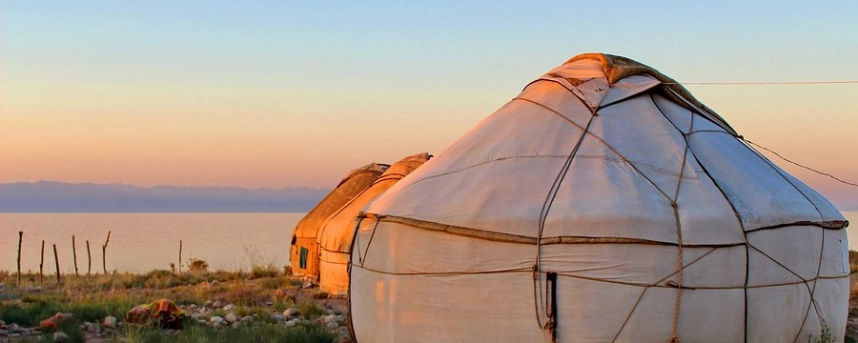
Nomadic culture is alive: every summer, thousands of families move to high-altitude jailoo (pastures), set up yurts, and herd livestock for months. Not a tourist show — a parallel reality coexisting with smartphones and Starlink.
📌 Did you know? In 2006, Turkish and Kyrgyz researchers found stone inscriptions in the Talas Valley dating to the 7th–8th centuries, containing the ethnonym “Kyrgyz.” One of the oldest written records of a surviving nation — predating the formation of most European states.
Climate: When Is the Best Time to Visit?
Kyrgyzstan has extreme climatic contrasts: +38°C in Bishkek in summer, snow on a pass 200 km away. Sharply continental, with dramatic day-to-night temperature swings.
- Summer (June–August): peak season. Passes open, yurt camps running, Issyk-Kul warm. Best window for road trips.
- Autumn (September–October): golden mountains, fewer tourists, lower prices. Cold nights at altitude.
- Winter (November–March): skiing at Karakol. Lowest rental prices. Mountain routes closed.
- Spring (April–May): wildflowers in valleys. Major passes (Son-Kul) still blocked.
Practical Tips: Connectivity, Navigation, and Getting Around
SIM Card and Internet
Buy a prepaid SIM at Manas Airport or any mobile shop in Bishkek. Operators: Megacom, Beeline, O!. A data package costs $3–6. In cities and along highways: fast 4G. In gorges and mountain passes: signal drops entirely. Download offline maps before you leave.
Navigation
Google Maps is unreliable in remote Kyrgyzstan — it sometimes shows roads that do not exist and misses ones that do. Maps.me and OsmAnd have far better topographical data for this region. Always use offline mode.
How to Get Around: Matching the Vehicle to the Route

The right vehicle depends entirely on where you plan to go. Kyrgyzstan has three tiers of road, and each calls for a different car:
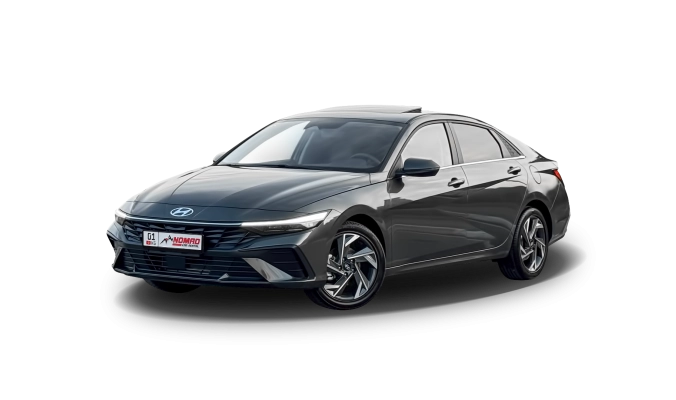
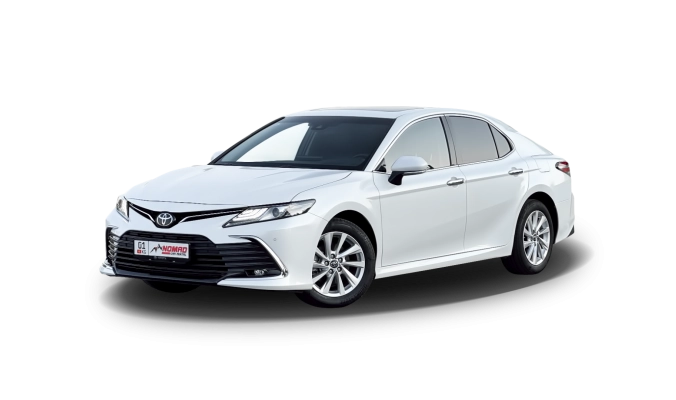
- Sedans (Chevrolet Monza, Hyundai Elantra, Toyota Camry): ideal for city driving, business trips, and the paved highway to Issyk-Kul’s north shore (Cholpon-Ata). The most economical option for routes that stay on asphalt.
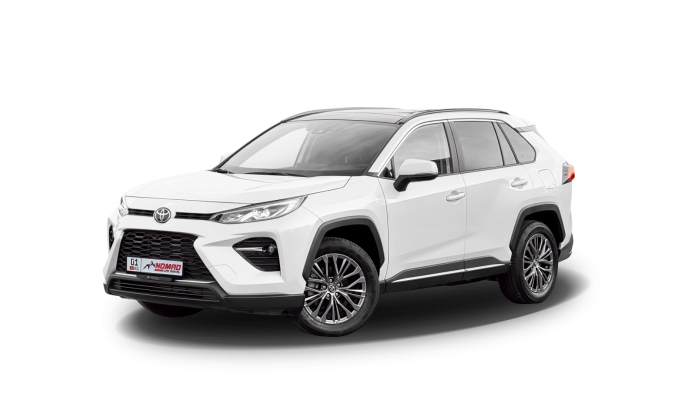
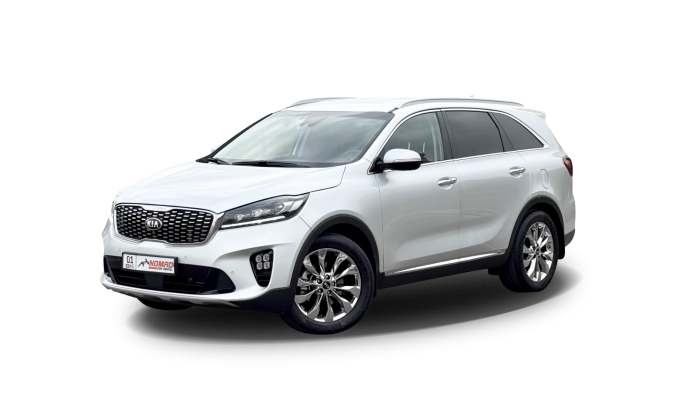
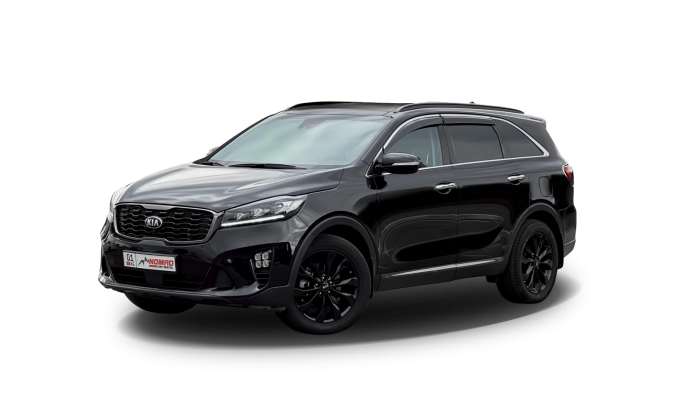
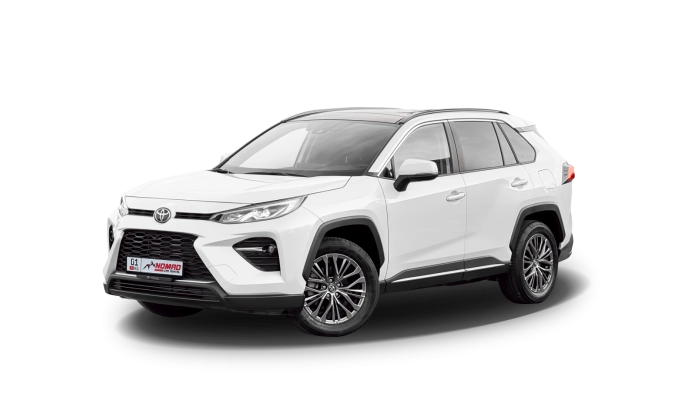
- Crossovers and 4WD crossovers (Toyota RAV4, Wildlander, Hyundai Santa Fe, Kia Seltos): the right choice for mixed routes with gravel sections — the south shore of Issyk-Kul, Jeti-Oguz, Skazka Canyon, and standard detours off the main highway.
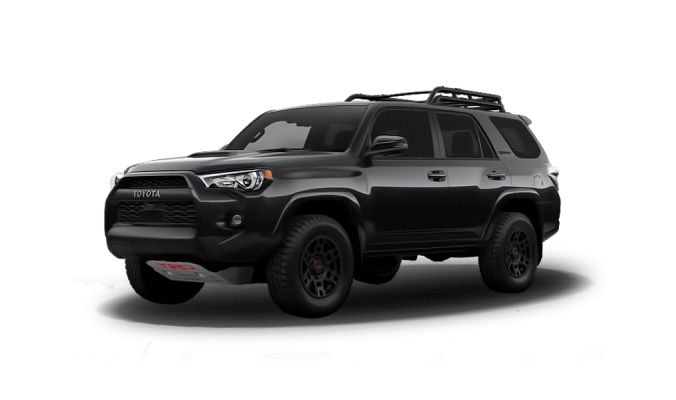
- Full-size 4x4 SUVs (Toyota 4Runner, Land Cruiser, Lexus LX 470, Toyota Sequoia): necessary for Son-Kul, Kel-Suu, Arslanbob approaches, the Barskoon plateau, and other remote mountain routes where ground clearance and low-range 4WD are not optional.
Other transport options:
- Marshrutkas and buses: cheap, point-to-point between major cities. No access to off-highway destinations.
- Domestic flights: Bishkek–Osh and Bishkek–Karakol (~$50, under an hour).
Renting a Car Through Nomad Car Rental
Nomad Car Rental (nomadcar.kg) is a local rental company based in Bishkek with a fleet of 30+ vehicles across all three tiers — from budget sedans to full-size 4x4 SUVs. Their team can help match the right vehicle to your planned route, whether that is a week on paved highways or an expedition into remote mountain territory.
Key rental conditions:
- Minimum driver age: 23 years.
- Minimum driving experience: 3 years.
- Territory: vehicles may be used within Kyrgyzstan only. Cross-border travel is not permitted.
- Mileage: 300 km per rental day, cumulative across the full booking.
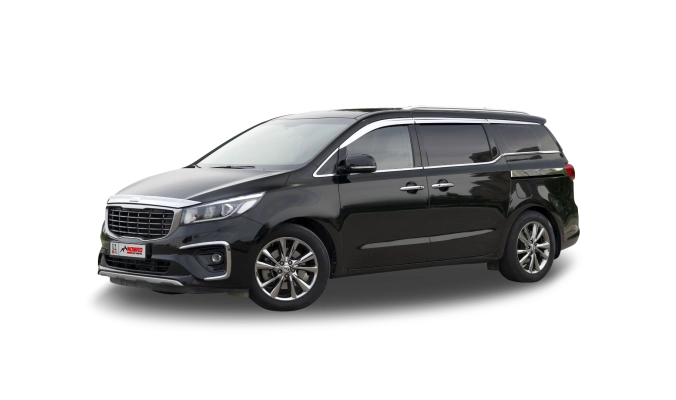
- Deposit: from $300 for sedans; from $500 for crossovers, SUVs, and minivans.
- Vehicle handover: the car is delivered clean and with a full tank. It must be returned in the same condition.
- Insurance: OSAGO and CASCO included on all vehicles.
- Delivery: meet-and-greet at Manas Airport (BSZ) or any address in Bishkek.
Frequently Asked Questions (FAQ)
Is Kyrgyzstan safe for tourists?
Yes. Kyrgyzstan is widely considered one of the safest countries in Central Asia for international travellers. Violent crime against tourists is extremely rare. Standard precautions apply: keep valuables out of sight, fuel up before remote stretches, carry cash outside cities.
Do I need a visa to enter Kyrgyzstan?
Visa rules depend on your nationality and may change. Many passport holders enjoy visa-free entry for stays of up to 30 or 60 days, but requirements vary. Always check the current rules on the official website of the Ministry of Foreign Affairs of the Kyrgyz Republic before booking your trip.
How do I get to Kyrgyzstan?
Most international flights arrive at Manas International Airport (BSZ, formerly FRU), about 25 km from Bishkek. Direct flights from Istanbul, Dubai, Delhi, Moscow, and Almaty.
Can I rent a car as a foreigner in Kyrgyzstan?
Yes. Local rental companies in Bishkek offer vehicles ranging from sedans to full-size SUVs. The right choice depends on your route: a sedan covers paved highways, a crossover handles mixed routes with gravel, and a 4x4 SUV is needed for high-altitude mountain roads. Nomad Car Rental (nomadcar.kg) can help match the vehicle to your itinerary.
What currency does Kyrgyzstan use?
The Kyrgyz som (KGS). As of mid-2026: 1 USD ≈ 87–88 som. Exchange booths in Bishkek offer the best rates. Carry cash for rural areas.
What language do they speak in Kyrgyzstan?
Kyrgyz (state language) and Russian (official language). In Bishkek and Karakol, Russian is widely spoken. English is limited outside tourist areas.
What does the Kyrgyzstan flag mean?
Red field = bravery. Golden sun with 40 rays = the 40 ancient tribes. Tunduk (circle inside the sun) = the crown of a yurt, symbol of home and unity.